


For a pet food brand, a bag that fails to keep kibble fresh becomes a complaint long before the contents are finished. Fat oxidises, aroma escapes into storage and retail shelves, moisture creeps in after the first opening, and a cat that rejects stale food leaves the buyer with returns, negative reviews and lost repeat orders. Sourcing therefore turns on more than print quality or unit price: the structure, seal and closure must protect palatability from filling line to final serving, across transport, warehousing and everyday use in the home.
This article sets out what to require from a cat food packaging bags manufacturer when freshness, odour control and resealability decide product performance. It explains how barrier layers, seal integrity and zipper or slider closures work together, what questions to ask about testing and repeat opening, and how to compare suppliers on practical criteria rather than claims alone. The aim is to help importers, brand owners and contract packers specify a bag that preserves aroma inside, keeps odours out of the surrounding space, and still closes securely after every use.
Most cat food loses appeal not on the shelf, but in the kitchen after the first scoop. Once the seal is broken, kibble meets oxygen, humidity and household odours, and surface fat starts to oxidise. A bag that cannot close tightly lets a dry product go stale within days, even when the unopened barrier was excellent.
For wholesale cat food bags with zipper, the test is simple: the track must align after repeated use, stay clear of crumbs, and hold when the bag is squeezed or tipped. A weak zipper leaks aroma into cupboards and invites moisture back in. Custom stand up cat food packaging bags should be specified with track profile and seal area matched to fill weight, then checked with filled samples stored opened.
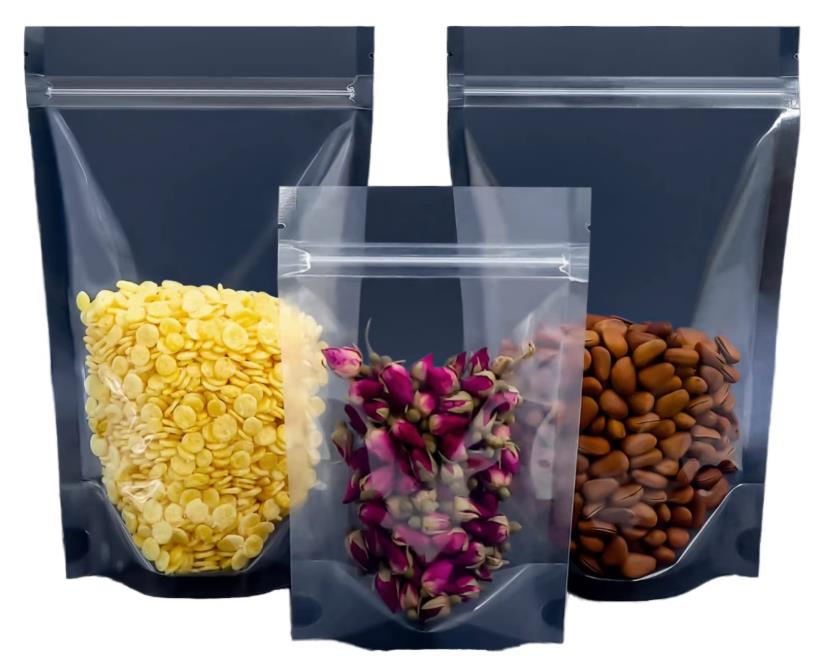
Freshness complaints rarely start with a single bad batch. They build when a brand changes kibble recipe, increases fat content, moves to a larger pack, or ships through warm, humid routes without revisiting the bag. Private labels face the same risk at lower volumes, because a retailer will blame the product on the shelf, not the film structure behind it.
A capable cat food packaging bags manufacturer China partner should therefore ask about recipe, pack size, storage and distribution before quoting film or zipper options. A bulk cat food pouches manufacturer that only sells by size and print will miss the conditions that cause most returns. Buyers should share complaint history, open-pack storage time and retail handling, then agree the failure modes the new bag must prevent.
Odour control is not a coating or a claim on the front panel. It comes from a laminated film that slows oxygen and moisture movement, a seal that stays intact under fill weight, and a zipper that closes the same way on the twentieth use as on the first. If any one of those three fails, aroma escapes, outside air enters, and the cat is often the first to refuse the food.
Flat-bottom formats help because the base stays stable, the side seals carry load evenly, and the top can be shaped for a wide, clean zipper track. In practice, custom flat-bottom pet food pouches with zipper suit dry kibble lines where the bag is opened daily, poured, then resealed and stored upright in a kitchen cupboard.
A flat bottom cat food bags manufacturer for dry food should prove track alignment, seal strength and drop resistance on filled samples, not on empty pouches alone.
Buyers should treat food-contact compliance as a document question, not a slogan. Ask which regulations the film and ink system are intended to meet for direct contact with dry pet food, what migration evidence the supplier can share, and whether the same construction is used for every size or changes by format. A supplier that cannot explain its material choices in plain terms, or offers one certificate for a different construction, leaves the buyer carrying the risk.
Barrier and odour claims need the same discipline. Ask how the supplier classifies barrier performance, which tests were run on the finished pouch rather than flat film alone, and how zipper cycling, seal strength and leak checks were done after filling and transport simulation. A Cat Food Packaging Bags Manufacturer that answers with test scope, sample conditions and limits, instead of a single superlative, gives a buyer a specification that can be checked and enforced on delivery.
A Cat Food Packaging Bags Manufacturer should show evidence, not adjectives, for barrier and seal performance. Ask for oxygen and moisture transmission results for the exact laminate proposed, plus heat seal strength tested by a recognised method such as ASTM F88. Dry kibble loses aroma and turns stale when oxygen and humidity enter through weak seals or thin film, so a supplier that quotes only a generic film name has not answered the freshness question.
Repeated opening matters as much as the first seal. Request zip cycling results for a household bag opened and closed around 30 to 50 times during use, and check that the track still closes fully without end gaps after filled bag drop and handling trials. Also ask for a leak check on filled samples stored on their side, and for laminate adhesion results after scuffing, because failure at the zip or corner ends the freshness promise.
Format decides how much air stays trapped and how often a dry food bag is disturbed. A flat three side seal pouch is cheap to fill, but it falls over, creases at the seal and lets air in each time it is handled. Custom stand up cat food packaging bags stay upright, reduce spillage and leave room for a zipper, while a flat bottom version adds a base that resists tipping and keeps kibble away from the top seal.
In a typical kitchen test, the longest freshness comes from a flat bottom bag with a tight zipper, a high barrier laminate and a narrow headspace, opened once a day and resealed at once. That is why buyers comparing a flat bottom cat food bags manufacturer for dry food often favour custom flat-bottom pet food pouches with zipper for larger packs, while smaller stand up pouches suit trial sizes where the bag is finished quickly.
Before a bulk order, confirm size against fill weight, not against a catalogue picture. A 1 kilogram pack needs a different width, gusset and zipper strength from a 5 kilogram or 10 kilogram pack, and a light trial zipper can split under a large bag lifted by its top.
For wholesale cat food bags with zipper, also lock down print proofing, colour tolerance, minimum order quantity, artwork for feeding guidance and reseal instructions, and the delivery schedule in writing. A bulk cat food pouches manufacturer should state carton quantity, pallet build and lead time for repeat orders, because a late or short delivery leaves shelves empty while a print error leaves the whole batch unsaleable.
A Cat Food Packaging Bags Manufacturer that understands freshness should offer more than a logo and a size. Customisation starts with the laminate and barrier level matched to dry kibble, a zipper chosen for pack weight and opening frequency, and a flat bottom or stand up base that keeps the bag upright in storage.
Print and structure should work together: matte or gloss finish, clear reseal guidance, feeding and storage instructions, and a window only where it does not weaken the barrier. When sourcing from a cat food packaging bags manufacturer China base, ask for samples in the exact laminate, zipper and print finish proposed, and compare them after storage, so customisation is judged on freshness kept, not on appearance alone.
Freshness is not decided by a single feature. It comes from barrier structure, seal integrity, closure design and filling compatibility working together across the life of a cat food packaging bag. A manufacturer earns trust by explaining each choice, showing how it is tested, and adjusting the specification when recipe, kibble size or retail channel changes. Buyers who compare suppliers on that evidence, rather than on appearance or price alone, reduce spoilage, returns and damage to brand reputation.
Before ordering, request samples in the exact sizes you intend to sell, run them through your filling line, and check opening, resealing and stacking under real warehouse conditions. Confirm lead times, print quality and quality checks in writing, and keep a retained sample from each production run. Shenlong Packaging Products Co., Ltd. can support that evaluation with its cat food packaging bag range, helping you move from a shortlist to a specification that protects freshness from factory to feeding bowl.
Start with two or three sizes that match your main pack weights, for example a small retail size, a mid size for regular buyers and a larger value size if your channel supports it. Test each size on your filling line for fill accuracy, seal width and shelf stability before committing to a wider range. A narrow first range also simplifies stock control, printing and storage while you learn which size sells fastest.
Ask for test evidence covering oxygen and moisture barrier performance, seal strength, puncture resistance and closure function after repeated opening. Compare results for the exact structure offered, not a generic material, and check that samples were tested after filling and transport simulation. Open a filled sample, reseal it, store it as a consumer would, and inspect the food for loss of aroma, texture change or moisture uptake.
The minimum order quantity depends on bag size, structure, printing method and whether a custom plate or cylinder is required, so it varies widely between suppliers and specifications. For a first trial, ask whether a smaller run is possible with digital printing, a plain stock size or a shared production schedule. Confirm the price difference, lead time and any repeat order conditions in writing before you approve the trial.
For dry cat food, a press to close zipper gives a reliable seal and simple use, while a slider can suit larger bags where easy opening matters more than cost. A tin tie is better suited to paper based bags and lighter fills, but it does not reseal as tightly after repeated use. Choose the closure after testing it with your kibble size, fill level and the way shoppers handle the bag at home.
Supply artwork on the exact dieline provided by the manufacturer, with bleed, safe areas and colour references agreed before printing starts. Provide bag width, height and gusset depth in millimeters, and confirm the front and back panel layout, zipper position and valve placement if one is used. Ask for a printed proof or digital proof for approval, and keep the approved file as the reference for every repeat order.


